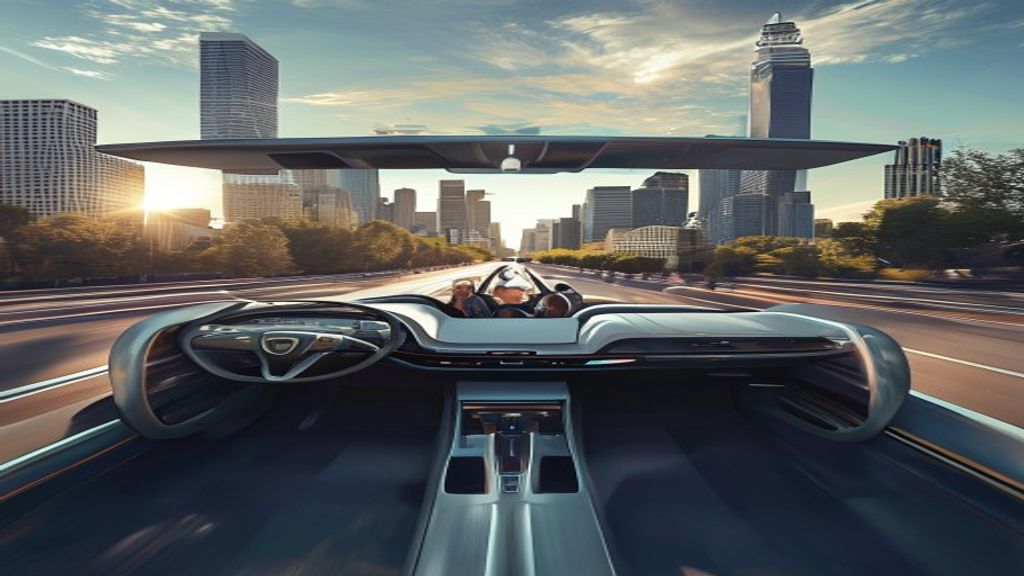
Austin, Texas – The future of urban transportation, long envisioned by futurists and tech titans alike, took a tangible step forward as Tesla reportedly commenced testing of its fully autonomous Cybercab in Austin. This development signals a potential acceleration in Elon Musk’s long-standing promise to launch a dedicated robotaxi network, introducing a vehicle designed from the ground up without traditional controls.
Answer-First: Tesla has indeed begun testing its innovative Cybercab, a vehicle designed to operate entirely without human input, featuring no pedals or steering wheel, on public roads in Austin, Texas. This move represents a pivotal moment, bringing Elon Musk’s years-long commitment to a Tesla robotaxi network closer to potential realization.
For years, Tesla CEO Elon Musk has championed the vision of a self-sustaining network of autonomous robotaxis, promising a revolution in urban mobility. While the full self-driving (FSD) software has been under continuous development and deployment in beta form to consumers, the introduction of a purpose-built vehicle, devoid of conventional human interfaces, marks a significant philosophical and engineering leap. The testing activity, observed and reported from the company’s operational base in Austin, suggests Tesla may finally be preparing to put its most ambitious autonomous vehicle concept to the ultimate real-world test.
The Austin Proving Ground for Autonomy
Austin, already a hub for Tesla’s manufacturing and engineering operations, is now becoming the initial proving ground for the Cybercab. Reports indicate that these vehicles are being tested in operational environments, albeit likely under controlled conditions, to refine their navigation, perception, and decision-making capabilities without human override. The absence of a steering wheel or pedals fundamentally redefines the relationship between passenger and vehicle, placing complete trust in the underlying artificial intelligence and sensor suite.
A Decade of Promises, A Moment of Tangible Progress
Musk’s predictions for a Tesla robotaxi network date back nearly a decade, with specific timelines often revised. From early promises of a million robotaxis by 2020 to more recent updates, the vision has consistently remained ambitious. The initiation of physical testing with a purpose-built, Level 5 autonomous vehicle (meaning it can operate without human intervention in all conditions) represents a significant shift from software-centric beta programs to hardware-integrated, operational validation. This move signifies that Tesla believes its foundational AI and hardware are reaching a level of maturity sufficient for real-world deployment of driverless vehicles.
Beyond the Wheel: The Cybercab’s Radical Design
The design ethos of the Cybercab, completely omitting traditional controls, underscores a paradigm shift in automotive engineering. This approach allows for a reimagined interior space, potentially offering more room for passengers, versatile seating arrangements, and an enhanced in-cabin experience free from the constraints of a cockpit designed for human driving. It also reflects Tesla’s confidence in its vision-only autonomy stack, which relies heavily on cameras and neural networks to perceive and navigate the environment, eschewing more expensive lidar or radar setups typically used by competitors.
Tesla’s Vision-Only Approach in Practice
Tesla’s commitment to a camera-centric, vision-only approach for its autonomous driving system has been a point of differentiation and debate within the industry. Proponents argue that cameras, much like human eyes, provide the most relevant data for driving. Critics often highlight the limitations of vision in adverse weather conditions or low light, advocating for sensor fusion with lidar and radar for redundancy and robustness. The Cybercab testing in Austin will serve as a crucial real-world validation of Tesla’s chosen path, demonstrating its ability to handle complex urban scenarios without additional sensor types.
The Broader Race for Autonomous Mobility
While Tesla’s entry into the purpose-built robotaxi arena is highly anticipated, it joins a competitive landscape already populated by established players. Companies like Waymo (Alphabet’s self-driving unit) and Cruise (General Motors’ autonomous vehicle subsidiary) have been operating commercial robotaxi services in select cities for some time, albeit with varying degrees of success and regulatory challenges. Tesla’s advantage, if its technology proves reliable at scale, could lie in its integrated approach – designing both the vehicle and the autonomous software in-house, leveraging its vast fleet data for training. The race for widespread robotaxi deployment is not just a technological challenge but also a regulatory and public acceptance hurdle.
Navigating the Regulatory and Safety Landscape
The deployment of fully driverless vehicles presents complex regulatory and safety considerations. Governments at local, state, and federal levels are grappling with how to safely integrate these technologies into existing transportation frameworks. Public trust, often shaken by high-profile incidents involving autonomous vehicles, remains a critical factor for widespread adoption. Tesla’s rigorous testing and transparent reporting on safety metrics will be paramount in building confidence and securing the necessary approvals for scaling its Cybercab network beyond initial testing phases.
Frequently Asked Questions (FAQ) About Tesla Cybercab
What is the Tesla Cybercab?
The Tesla Cybercab is a concept for a fully autonomous robotaxi, purpose-built by Tesla to operate without any human controls like a steering wheel or pedals. It is designed to be part of an envisioned ride-hailing network where users can summon driverless vehicles on demand.
Where is the Cybercab being tested?
Tesla has commenced testing of its Cybercab vehicles in Austin, Texas, where the company has significant operational facilities, including its Gigafactory.
When can I expect to ride in a Cybercab?
While testing has begun, there is no official public launch date for the Cybercab network. The timeline will depend on the successful completion of extensive safety validation, regulatory approvals, and the company’s ability to scale production and operations.
How does it work without a steering wheel or pedals?
The Cybercab relies entirely on Tesla’s advanced Full Self-Driving (FSD) system, which uses a network of cameras and deep learning artificial intelligence to perceive the environment, navigate, and make driving decisions. The absence of traditional controls signifies that the vehicle is designed for Level 5 autonomy, requiring no human intervention at any point.
Is the Cybercab safe?
Safety is paramount for any autonomous vehicle. Tesla’s Cybercab will undergo rigorous testing, validation, and regulatory approval processes to ensure it meets stringent safety standards before public deployment. The company’s goal is to demonstrate that its autonomous system can operate more safely than a human driver.
The beginning of Cybercab testing in Austin marks a significant milestone for Tesla and the broader autonomous vehicle industry. While the journey from initial tests to widespread commercial deployment is invariably long and complex, this development underscores Tesla’s unwavering commitment to its robotaxi vision, potentially reshaping the future of urban transportation. The road ahead will be closely watched by innovators, regulators, and commuters alike.