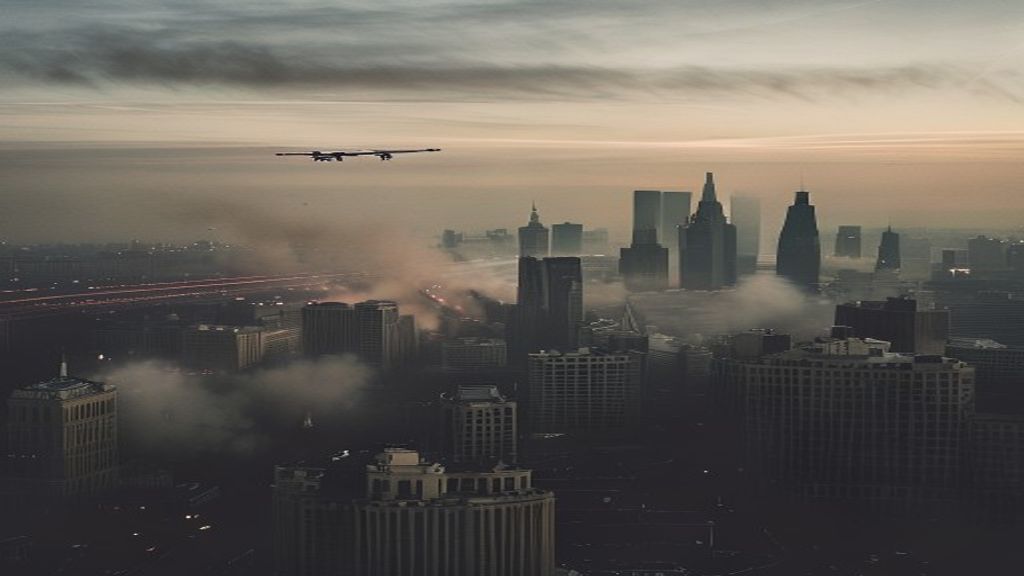
The Russian capital, moscow, found itself under renewed aerial assault recently, as a series of drone attacks once again targeted key areas within the city. This latest incident, following a pattern of similar incursions, significantly amplifies the pressure on President Vladimir Putin, challenging the Kremlin’s narrative of stability and the effectiveness of its homeland security. As the conflict in Ukraine continues, the specter of war is increasingly manifesting on Russia’s home front, raising critical questions about strategic vulnerabilities and the evolving dynamics of modern warfare.
**So, what does the increased drone activity in Moscow mean for President Putin?** These recurring Russian drone attacks signify a direct challenge to his authority and a potential erosion of public confidence in the Kremlin’s ability to protect its citizens and critical infrastructure, thereby intensifying domestic and international scrutiny of his leadership and the broader conduct of the war.
Moscow Under Siege: Escalating Russian Drone Attacks
Reports indicate that several drones were detected over moscow airspace, with some reportedly intercepted by air defense systems, while others impacted targets, including commercial buildings in the city’s financial district. While the extent of damage has largely been described as minimal by Russian authorities, the psychological impact and symbolic significance are undeniable. These repeated incursions into what was once considered impregnable airspace serve as a stark reminder that the conflict is no longer confined to battlefields hundreds of miles away, but now touches the very heart of Russian power.
The escalating frequency of these incidents suggests a calculated strategy, likely from Ukraine, to disrupt Russian normalcy, strain its defense resources, and underscore the vulnerability of its capital. Such operations feed into the broader narrative of Ukraine war escalation, demonstrating an evolving tactical approach beyond conventional front-line engagements.
Kremlin Security Concerns and Putin’s Domestic Pressure
For President Putin, these drone attacks represent more than just a military nuisance; they are a direct challenge to his authority and the image of a strong, secure Russia he has carefully cultivated. The inability of Russian air defense to entirely prevent these incidents sparks questions internally about the competence of military leadership and the efficacy of vast defense budgets. This directly translates into heightened Kremlin security concerns, prompting visible increases in surveillance and defensive postures across the capital.
The domestic fallout could be significant. While state media largely controls the narrative, repeated breaches of Moscow’s airspace are hard to ignore. They can erode public trust, foster uncertainty, and fuel discontent among segments of the population who may begin to question the rationale and management of the ongoing conflict. This represents a substantial source of Putin’s domestic pressure, compelling him to demonstrate a more decisive and effective response both defensively and offensively.
The Evolving Landscape of Urban Warfare Drones
The use of drones in this conflict underscores a significant shift in modern warfare, especially concerning urban warfare drones. These relatively inexpensive and often difficult-to-detect aerial vehicles present asymmetrical threats that challenge even the most sophisticated conventional air defense systems. Their deployment over dense urban environments necessitates complex countermeasures, from electronic jamming to precision interception.
The technological arms race is continuous, driving innovation in both offensive drone capabilities and defensive anti-drone systems. This constant evolution highlights the adaptability and critical role of various engineering disciplines. In fact, despite earlier predictions that AI was supposed to kill engineering jobs, but new data suggests they’re the most resilient, the demands of developing advanced autonomous systems and robust defensive technologies affirm the enduring and growing need for human ingenuity in these fields.
What’s Next for Moscow and Russian Security Measures?
In response to the escalating threats, Moscow security measures are expected to intensify further. This could include deploying more anti-drone systems, increasing surveillance, and potentially even stricter controls on airspace. However, the sheer size and complexity of protecting a city like Moscow make a foolproof defense incredibly challenging. The attacks also serve as a constant reminder of the war’s tangible effects, making it harder for the average Russian citizen to remain detached from the conflict.
Internationally, these incidents reinforce the perception of a protracted and unpredictable conflict. They fuel debates about the limits of conventional warfare, the ethics of targeting civilian areas (even if the drones are aimed at commercial or governmental structures), and the potential for further escalation. The pressure on Putin will likely continue to mount as long as these attacks persist, forcing the Kremlin into a difficult balancing act between maintaining domestic stability and pursuing its geopolitical objectives.
Frequently Asked Questions (FAQ)
Who is responsible for the drone attacks in Moscow?
While Ukraine has rarely officially claimed responsibility for specific drone attacks deep within Russian territory, Western intelligence assessments and the context of the ongoing conflict strongly suggest Ukrainian involvement. These operations are often viewed as a retaliatory measure and a strategy to bring the war’s impact closer to the Russian populace and leadership.
What is the typical target of these drone attacks?
The targets often include government buildings, military installations, or commercial districts with symbolic importance within moscow and surrounding areas. While civilian casualties have been relatively low, the intent appears to be more about demonstrating vulnerability and applying psychological and political pressure rather than causing mass destruction.
How effective are Russia’s air defense systems against drones?
Russia possesses sophisticated air defense systems, and many incoming drones are reportedly intercepted. However, the repeated successes of some drones in reaching targets, even if minor, indicate that no defense system is foolproof, especially against smaller, slower, and often low-flying drones. The sheer volume and diverse trajectories of drone attacks also pose significant challenges for even advanced systems like those protecting moscow.
What are the long-term implications of these drone attacks for the war?
The long-term implications include a likely escalation of tit-for-tat attacks, further militarization of urban centers, and increased strain on Russian resources. Politically, they contribute to domestic dissent within Russia and reinforce Ukraine’s narrative of resilience and its ability to project power. They also highlight the changing nature of warfare, where relatively low-cost drones can have significant strategic and psychological impacts.