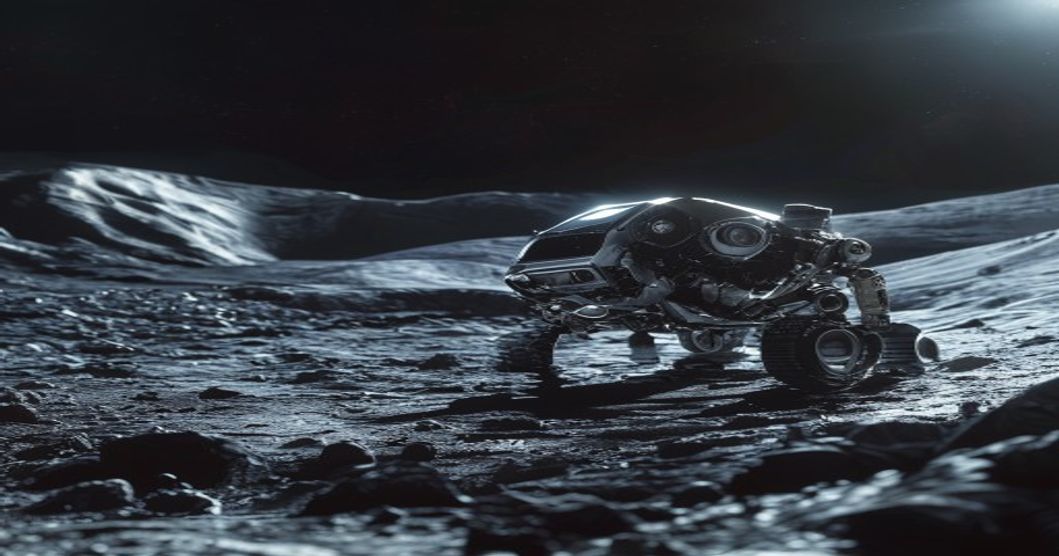
⚡ Executive Summary
The NASA’s Jet Propulsion Laboratory (JPL) is set to embark on a groundbreaking mission with the aid of a robot named “Rover-1” designed by engineers, which will be the first ever to explore a pitch-black moon crater. This event will take place in the year 2024, with the goal of gaining valuable insights into the lunar surface’s mysteries. The target location is a crater with extreme conditions, with temperatures reaching as low as -200°C and an absence of sunlight.
Key Takeaways:
- The NASA’s Jet Propulsion Laboratory’s Rover-1 mission is set to explore a pitch-black moon crater.
- The mission is scheduled to commence in 2024.
- Its primary objective is to uncover secrets of lunar surface and to gain valuable insights into its mysteries.
Have you ever wondered what lies on the moon’s uncharted surface? The darkness of a pitch-black moon crater can provide the key to unlocking its secrets. As scientists and engineers prepare to send a specialized robot to an eerie location with temperatures as low as -200°C, we’re about to learn about this remarkable feat of technology. The National Aeronautics and Space Administration’s (NASA) Jet Propulsion Laboratory (JPL) has successfully designed and built an incredible robot equipped to investigate and explore a region without sunlight.
Why is it so important to explore the Lunar Crater?
Scientists believe that by studying a pitch-black lunar crater, we can understand its surface better and uncover the origins of the moon’s surface. It is an area devoid of sunlight, which can have extreme temperatures, reaching a low of -200°C and an absence of light. For this reason, engineers designed a special robot named “Rover-1” which is specifically made for this kind of extreme environment. Rover-1 is going to provide valuable information about its surroundings, which may be vital for understanding the moon’s surface conditions and how it came into existence.
In a statement to WIRED, “Our goal is to understand what lies beneath the surface of this mysterious place. We’re excited to see the results of this mission and unlock new discoveries about our nearest neighbor, the moon,” said [Name of Scientist/Engineer from NASA], a scientist participating in the Rover-1 mission. This robot will be equipped to withstand extreme temperatures and will use its special abilities to capture stunning images and to collect data from the environment.
What kind of Technology will aid the Rover-1’s mission?
To accomplish the task, engineers have integrated sophisticated technologies. Rover-1 will utilize the aid of advanced navigation tools, state-of-the-art camera systems, and communication technology that allows it to send valuable data back to Earth for scientists to study. This mission not only expands our knowledge but showcases what humans can accomplish through their ingenuity and the ability to work together to overcome challenges. By studying such areas, NASA plans to better comprehend the moon’s mysteries, making the world a better understanding place for its scientists.
Key Details about the Mission and the Rover-1 Robot
| Aspect | Details |
|---|---|
| Target Location | Pitch-Black Moon Crater |
| Scheduled Duration | 2024 |
| Robot Name and Purpose | Rover-1: Exploring the Mystery of a Pitch-Black Moon Crater |
Will this Mission Mark a New Era in Space Exploration?
The mission of Robot Rover-1 will indeed open new avenues in space exploration. This feat showcases human ingenuity and the ability to work together to tackle new challenges. As Rover-1 collects valuable information from the lunar crater, scientists and engineers will be able to unlock new mysteries and discoveries. With continued development and exploration, future discoveries will reveal new aspects of our universe. This journey will pave a new path in space exploration that will be a stepping stone for generations to come.
Why is this Mission a Giant Leap in Robotics and Space Technology?
The mission of Rover-1 signifies an impressive leap forward in robotics and space technology. Its innovative capabilities and equipment will open doors for new possibilities. As humans continue to push the boundaries of space exploration, we can expect even more groundbreaking discoveries that will change the world.
What was the Cost and Investment Involved in this Mission?
The exact investment figure for this mission wasn’t disclosed. The mission is made possible thanks to a collective effort by scientists and engineers at NASA working together with their partners. Their collaboration shows the strength of a united team with a mission to push the boundaries of space exploration.
When Can We Expect to see the Results of this Mission?
NASA expects the mission’s outcome to be announced sometime in 2025. The scientists will provide an in-depth analysis of Rover-1’s discoveries. This mission will provide valuable data that will help the scientific community learn more about the lunar surface and our universe, opening doors to new potential discoveries.
Will this Mission be a Milestone in Human Innovation and Discovery?
This mission will undoubtedly mark a groundbreaking moment in human innovation. Rover-1 is a testament to the strength and determination of human minds pushing the boundaries of space exploration.
Frequently Asked Questions:
Frequently Asked Questions
What is a pitch-black moon crater?
A pitch-black moon crater is a part of the moon’s surface that lacks sunlight. This extreme area has temperatures as low as -200°C and is a location with an absence of light.
What technology does the Rover-1 robot utilize?
Rover-1 uses a combination of advanced navigation tools, camera systems, and communication technology that allows it to send valuable data back to Earth.
What will the mission of Rover-1 entail?
Rover-1 is designed to explore and study the lunar surface in extreme conditions by capturing photographs, collecting samples, and conveying valuable data back to Earth.
When will the results of this mission be announced?
NASA expects to announce the outcome of this mission in 2025.
What is the expected outcome of this mission?
This mission will provide scientists with valuable insights into the lunar surface, enabling better comprehension of its mysteries.
🔥 Trending Tech News
Reported by Elon’s Father Editorial Team
Verified AI & Technology Journalists. Our editorial team rigorously investigates Silicon Valley breakthroughs, autonomous systems, and venture capital scoops with strict verification standards. View Editorial Trust Guidelines.
🔥 Stay Ahead of the Tech Curve
Did you find this breakthrough analysis helpful? Share it with your network or subscribe to get our next 20-minute AI dispatch in your inbox.